GPT-6 Sol is half the price of Opus 5.5 per token. So why is a task only 20% cheaper?
On the price list GPT-6 Sol costs exactly half of Claude Opus 5.5. On a task in an independent test it is only 21% cheaper and 3 points weaker. Here is why.
In numbers
In this article6
GPT-6 Sol (OpenAI, 22 September 2026) costs $2/$10 per million input and output tokens; Claude Opus 5.5 (Anthropic, the same day) costs $4/$20. Per token Sol is half the price, but only for uncached input and for output in short context: cache reads cost the same on both models, and on long requests Sol's input rises to the Opus price. Per task the gap is smaller. In the independent Artificial Analysis Intelligence Index, Sol at maximum effort costs $1.06 per task and Opus 5.5 at medium effort $1.34, so Sol is 21% cheaper and three points weaker. Opus 5.5 leads at every effort level. On price Sol matches Claude Sonnet 5 exactly, and that is the fairer comparison.
$2 versus $4 per million input tokens. $10 versus $20 per million output tokens. On 22 September OpenAI released GPT-6 Sol, and the same day Anthropic released Claude Opus 5.5, about an hour and a half earlier. The price lists landed side by side, and the conclusion wrote itself: Sol is half the price.
That is true of a token. It is not true of a task. When we compared the flagships Fable 5.1 and GPT-6 Astra, the prices matched and the bills diverged. Here it runs the other way: the prices differ by a factor of two, while the bill for the same job almost converges.
GPT-6 Sol vs Opus 5.5: where the price list says "half" and where it doesn't
A price list has four lines, not two. These are all the lines that move an agent's bill, taken from the vendors' pages on 25 September:
| Per 1M tokens | GPT-6 Sol | Claude Opus 5.5 | Claude Sonnet 5 | GPT-6 Luna |
|---|---|---|---|---|
| Input | $2 | $4 | $2 | $0.10 |
| Cache read | $0.20 | $0.20 | $0.20 | $0.01 |
| Output | $10 | $20 | $10 | $0.50 |
| Input above 272K | $4 | $4 | $2 | $0.20 |
The first and third lines give you the "half". The second cancels it: a cache read on Opus 5.5 costs 5% of input, which is $0.20, exactly what Sol charges. An agent that resends a long history on every step pays for that history mostly at the cache rate, and there is no difference there. A cache write at Anthropic costs $5, 1.25 times the input price, and you pay it once per prefix.
The fourth line is about long context. Sol has a 1.05M-token window, but a request longer than 272K costs twice as much on input and one and a half times as much on output: $4 and $15. Claude gives you 1M of context at the standard price, with no surcharge. Feed a whole large codebase to either model and input costs the same, while output differs by 1.33 times, not two.
What price OpenAI measures "50% cheaper" from
In its announcement OpenAI says Sol and Luna are 50% cheaper, and then clarifies: compared with the promotional prices of GPT-5.6. That caveat matters.
Until 21 August GPT-5.6 Sol cost $5 for input and $30 for output. OpenAI then cut the price to $4/$20 and promised to hold it "at least through November 21, 2026". That temporary price is what the GPT-5.6 Sol line shows today. GPT-6 Sol is half of it, and a third of the old permanent price on output.
For you this means one thing: if your agent runs on GPT-5.6 Sol, it may get more expensive in two months without you touching anything. GPT-6 prices, according to an OpenAI spokesperson speaking to VentureBeat, are permanent rather than introductory.
What a task costs, not a token
A token price says nothing about how many tokens a task will take. One model solves it with three thousand output tokens, another reasons through a hundred thousand. So we look at cost per task in the Artificial Analysis Intelligence Index v4.3.2: ten benchmarks, from Terminal-Bench 4.0 to GDPval-AA, with the same harness for every model.
cost per task: GPT-6 Sol at maximum effort (48 points) and Claude Opus 5.5 at medium (51 points)
At maximum effort Sol comes out 21% cheaper and three points weaker. The other effort levels:
| Effort level | GPT-6 Sol | Claude Opus 5.5 |
|---|---|---|
| low | 34 points, $0.13 | 42 points, $0.55 |
| medium | 40 points, about $0.25 | 51 points, $1.34 |
| high | 43 points | 54 points |
| max | 48 points, $1.06 | 58 points, $5.98 |
Opus 5.5 at its lowest effort (42) nearly catches Sol at high (43). At maximum, Sol spends 31 thousand output tokens per task and Opus 5.5 spends 119 thousand, and here the price gap is huge: almost sixfold. Arguing over "half" or "a sixth" is pointless until you say what quality you need.
One more correction that price calculators leave out. According to Anthropic's documentation, the Claude tokenizer from 4.7 onward produces roughly 30% more tokens for the same text. A million tokens at Claude and a million at OpenAI are different amounts of work, so comparing "per million" prices across vendors is imprecise from the start.
What you give up for the difference
Quality, and noticeably. Opus 5.5 is ahead of Sol at every level, by 8 to 12 points. As reported by Implicator, the Artificial Analysis run of Terminal-Bench 4.0 gives Opus 5.5 52.5% and Sol 43.9%. Anthropic itself shows 66.4% for Opus 5.5 on the same Terminal-Bench 4.0: a different harness, a different number. The vendor table and the independent run are 14 points apart, and the difference comes from how the benchmark was run.
Sol still has an honest niche. If a task sits at 40 to 44 points on the index (triaging a ticket, extracting fields from a document, walking a clear checklist), Sol at medium costs about a quarter of a dollar against $1.34 for Opus at medium. That is a fivefold gap, and it is real.
The index is an average of ten benchmarks
Your task is not an average. The index cost per task was measured on one harness, without your prompt, your cache or your tools. It tells you the order of magnitude, not your bill.
The harness also shapes the real bill: in the HarnessTax research the same model cost two to three times more in different agents at the same success rate.
Sol's real price neighbour: Sonnet 5
VentureBeat mentions this in a single sentence, though it is the main twist. Claude Sonnet 5 costs $2 for input, $0.20 from cache and $10 for output. That matches Sol to the cent, and in long context Sonnet 5 is actually cheaper, because Claude has no surcharge above 272K.
Our opinion, and you can argue with it: "Sol or Opus 5.5" is the wrong question. For a team on Claude the right question is "Sol or Sonnet 5", and Opus 5.5 should be compared with Sol at maximum effort, where the task costs are already close. We will be wrong if an independent run of Sonnet 5 on the same index shows it noticeably weaker than Sol. As of 25 September we found no such number.
How to choose a model for your agent
- 1
Name the quality level you need
Not "the best model" but "handles this class of tasks". If Sol at medium is enough, Opus costs you five times more.
- 2
Measure cost per task on your own data
Take 20 typical tasks, run them on both models and add up the actual bill. Per-token price will not give you the answer.
- 3
Check your cache share and context length
If most of your input comes from cache, or requests run past 272K, the price-list gap almost disappears.
- 4
Get off promotional pricing
An agent on GPT-5.6 Sol runs on a temporary price until 21 November. Moving it to GPT-6 Sol now is cheaper than untangling the bill in December.
If you work in Claude Code on a subscription, the per-token price does not touch you at all; the weekly limit does. We worked through how context length eats it using the September limits.
"Half the price" describes the price list, but you pay for the task. Per task Sol is 21% cheaper than Opus 5.5 if you ask it for its maximum, and five times cheaper if the middle is enough. Only you know where your work sits on that scale.
Prices and versions as of 25 September 2026: GPT-6 Sol, GPT-6 Luna, Claude Opus 5.5, Claude Sonnet 5, Intelligence Index v4.3.2. Price lists and indexes change often; check current values before you budget.
Sources10expand
- OpenAI, "Introducing GPT-6 Sol and Luna", 22 September 2026 — https://openai.com/index/introducing-gpt-6-sol-and-luna/
- OpenAI, "API pricing", checked 25 September 2026 — https://developers.openai.com/api/docs/pricing
- OpenAI, "GPT-6 Sol", model page, checked 25 September 2026 — https://developers.openai.com/api/docs/models/gpt-6-sol
- OpenAI Developer Community, "20% price reduction for GPT 5.6 Sol", 21 August 2026 — https://community.openai.com/t/20-price-reduction-for-gpt-5-6-sol-api-codex-credits-and-chatgpt-work/1391726
- Anthropic, "Claude Opus 5.5", 22 September 2026 — https://www.anthropic.com/news/claude-opus-5-5
- Anthropic, "Pricing", Claude API documentation, checked 25 September 2026 — https://platform.claude.com/docs/en/about-claude/pricing
- Artificial Analysis, "Claude Opus 5.5 vs GPT-6 Sol", Intelligence Index v4.3.2, checked 25 September 2026 — https://artificialanalysis.ai/models/releases/comparisons/gpt-6-sol-vs-claude-opus-5-5
- VentureBeat, "OpenAI releases GPT-6 Sol and Luna models, slashing API costs 50% or more", 22 September 2026 — https://venturebeat.com/technology/openai-releases-gpt-6-sol-and-luna-models-slashing-api-costs-50-or-more
- Implicator, "GPT-6 Sol Halves OpenAI Prices but Trails Opus 5.5 in Tests", 22 September 2026 — https://www.implicator.ai/openai-gpt-6-sol-half-price-opus-5-5/
- TechCrunch, "OpenAI launches GPT-6 Sol and Luna", 22 September 2026 — https://techcrunch.com/2026/09/22/openai-launches-gpt-6-sol-and-luna/
Read next
 Don't choose between Claude Fable 5.1 and GPT-6 Astra until you've answered one questionSeptember 7, 2026
 Same model, same success rate, twice the money. What are you actually paying Claude Code for?September 17, 2026
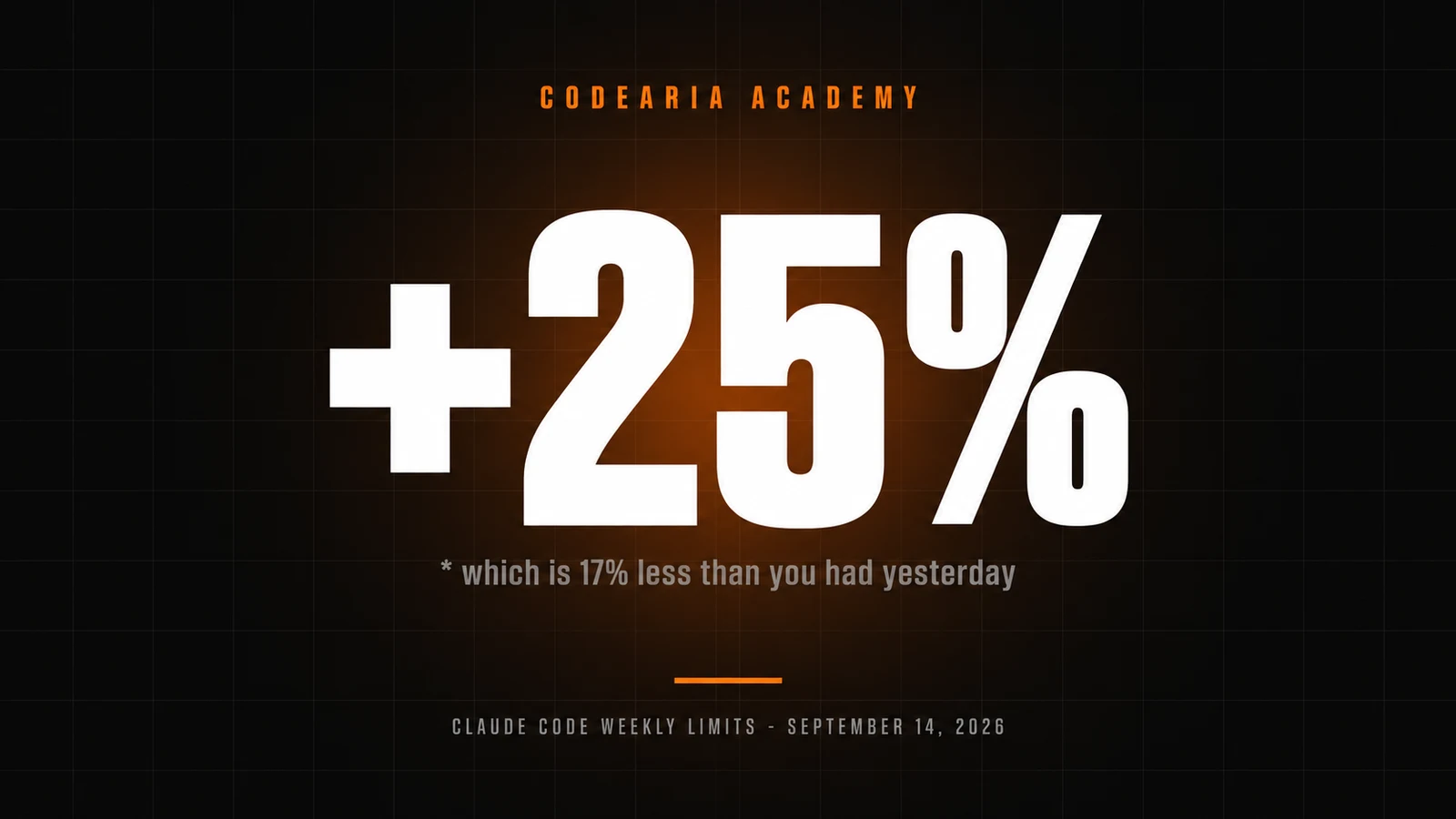 Anthropic raised Claude Code's weekly limits by 25% and cut them by 17% on the same day. How are both numbers true?September 15, 2026
Comments1
Кайф